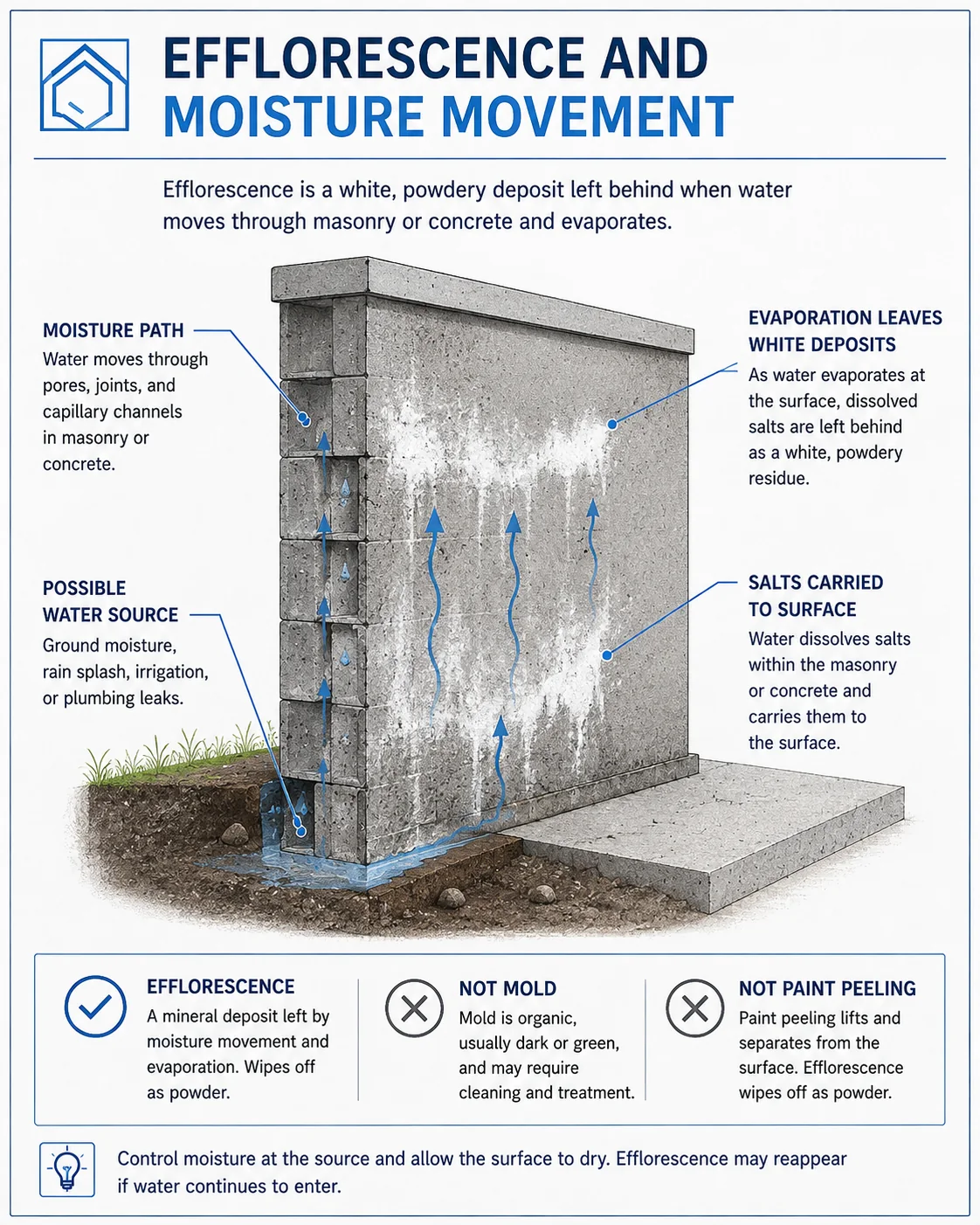
Efflorescence is a mineral deposit created as moisture moves through cementitious material and carries soluble compounds to the surface. It does not normally mean concrete pavers are structurally defective—but sealing over visible or still-active efflorescence can trap an appearance problem beneath a coating and make the repair harder.
What Efflorescence Actually Is
CMHA describes efflorescence as a whitish, powder-like deposit. During cement hydration, calcium hydroxide forms inside the concrete. Water can dissolve it and carry it toward the surface, where it reacts with carbon dioxide to form calcium carbonate. That visible deposit is efflorescence.
CMHA says it does not affect the structural performance or durability of concrete pavers. It is primarily an appearance and maintenance issue.
When Does It Show Up?
There is no single timetable. CMHA says efflorescence may appear immediately or within months after installation and may reach a peak in as little as about 60 days. Wet weather can trigger visible deposits after a dry installation period.
This variability explains why different paver manufacturers publish different waiting periods before sealing new work.
Why Published Waiting Periods Conflict
Belgard’s current online maintenance guidance says to wait at least 30 days before sealing so any efflorescence that appears can be removed. A 2025 Belgard installation guide takes a more conservative approach and says sealers should be applied after one year of service to allow potential efflorescence to dissipate. Techniseal’s current Paver Prep sheet says newly installed polymeric sand should wait at least 30 days before cleaning and sealing.
Those numbers should not be averaged into a new invented rule. Use the current instructions for the paver, sand, cleaner, and sealer actually installed.
Should You Clean Efflorescence Before Sealing?
Yes, when the selected system calls for an efflorescence-free surface. CMHA says dirt, oil stains and efflorescence should be removed before sealing and recommends proprietary cleaners formulated for concrete pavers. It also cautions that strong acids can change color and that test areas and manufacturer dilution instructions matter.
A cleaner can reveal the true paver color and reduce the chance of locking mineral residue beneath a clear film.
Do Not Confuse Efflorescence With Sealer Haze
Efflorescence exists in or on the cementitious substrate. Moisture blush or whitening exists in the sealer film. If the pavers were already sealed and then turned milky, the surface may need a coating diagnosis before any efflorescence cleaner is used.
See Why Paver Sealer Turns White, Hazy or Milky.
What If Efflorescence Keeps Returning?
Recurring deposits mean moisture is still transporting soluble material. Investigate drainage, irrigation, constantly wet joints, a high-moisture base, and other water sources. CMHA notes that if recurrence is a concern, a breathable sealer can be considered after the deposits are under control.
Avoid the “Seal It So It Can’t Come Back” Trap
A surface film can change how moisture leaves the paver; it does not eliminate the underlying chemistry. CMHA warns that a non-breathable sealer can contribute to trapped efflorescence and whitening. The goal is to manage moisture and choose a compatible system, not simply make the top layer less permeable.